Regulatory compliance in healthcare standards are designed to protect patients from potential harm and ensure the delivery of high-quality healthcare services. Compliance with regulations helps healthcare providers maintain and improve patient safety protocols, including proper medication management, infection control, equipment sterilization, and accurate record-keeping.

This article will delve into the intricacies of regulatory compliance in healthcare, emphasizing its significance within the healthcare industry and how Scrut can effectively ensure that your organization complies with all applicable rules and regulations.
What is regulatory compliance in healthcare?
Regulatory compliance in healthcare refers to the process of healthcare organizations, professionals, and entities adhering to the various laws, rules, standards, and guidelines established by government agencies and regulatory bodies to ensure the delivery of safe, high-quality, and ethical healthcare services.
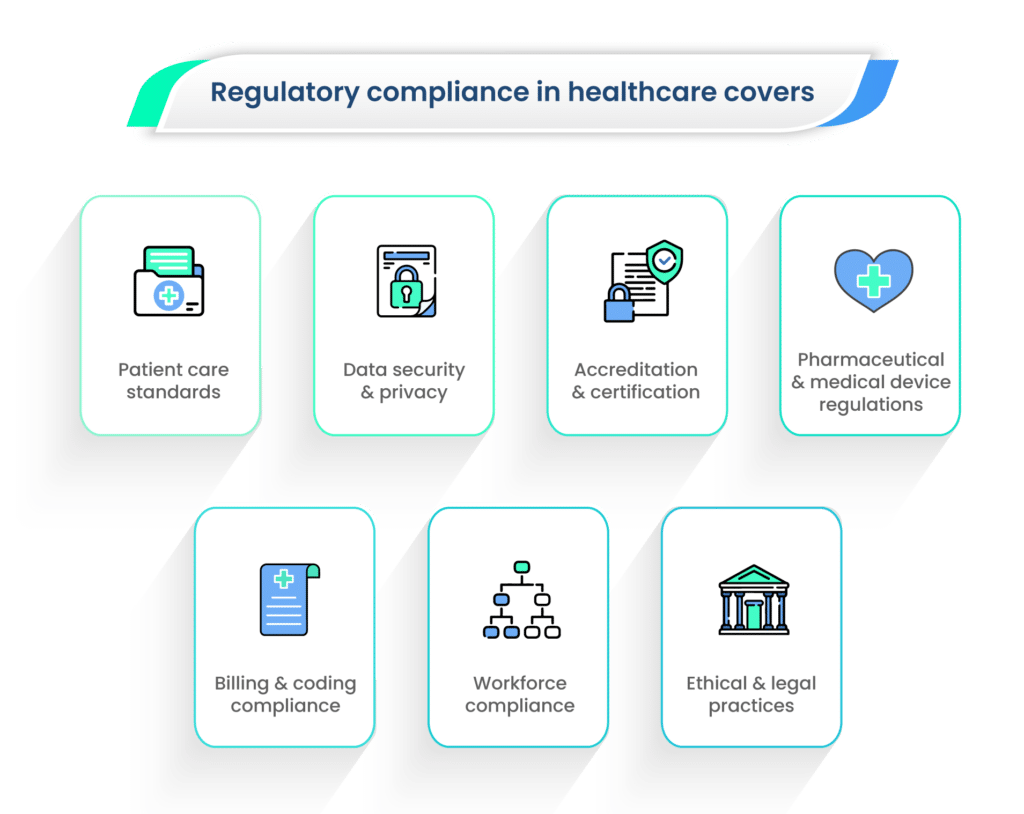
These regulations are in place to protect patients, maintain the integrity of the healthcare industry, and safeguard public health. Healthcare regulatory compliance covers a wide range of areas within the healthcare sector, including but not limited to:
- Patient care standards: Regulations set specific standards of care that healthcare providers must follow to ensure the well-being of patients. These standards encompass everything from diagnosis and treatment to patient rights and informed consent.
- Data security and privacy: Laws such as the Health Insurance Portability and Accountability Act (HIPAA) in the United States mandate the protection of patient information and require healthcare organizations to implement strict data security and privacy measures.
- Accreditation and certification: Many healthcare facilities pursue accreditation from organizations like The Joint Commission to demonstrate their commitment to meeting high-quality care standards. Compliance with accreditation requirements is crucial.
- Pharmaceutical and medical device regulations: Regulatory agencies like the Food and Drug Administration (FDA) oversee the approval, marketing, and safety of drugs and medical devices to ensure they meet established standards.
- Billing and coding compliance: Healthcare organizations must accurately and ethically bill and code for services to prevent fraud, overbilling, or other financial misconduct.
- Workforce compliance: Healthcare providers must adhere to regulations related to the qualifications, training, and licensure of healthcare professionals.
- Ethical and legal practices: Compliance also extends to maintaining ethical and legal practices within healthcare, including issues related to conflicts of interest, research ethics, and anti-kickback statutes.
The importance of regulatory compliance in healthcare cannot be overstated. Non-compliance can lead to severe consequences, including legal actions, fines, loss of licensure, damage to reputation, and compromised patient safety. Conversely, adhering to healthcare regulations ensures the consistent delivery of high-quality care, protects patient rights and privacy, and upholds the integrity of the healthcare system.
To maintain compliance, healthcare organizations often establish compliance programs, appoint compliance officers, conduct regular audits and assessments, and provide ongoing training and education to their staff. Staying up-to-date with evolving regulations and adapting to changes in the healthcare landscape is essential for maintaining regulatory compliance in this complex and highly regulated industry.
How is the regulatory landscape in healthcare at present?
The regulatory healthcare in the US is one of the strictest in the world. It consists of checks at various levels to ensure public health information (PHI) is secure and shared only with accredited parties. The regulatory landscape also helps the patient in relying on the quality of healthcare they receive. Let’s look at some of the provisions that form the regulatory framework of the US healthcare system.
A. Key regulatory bodies in healthcare
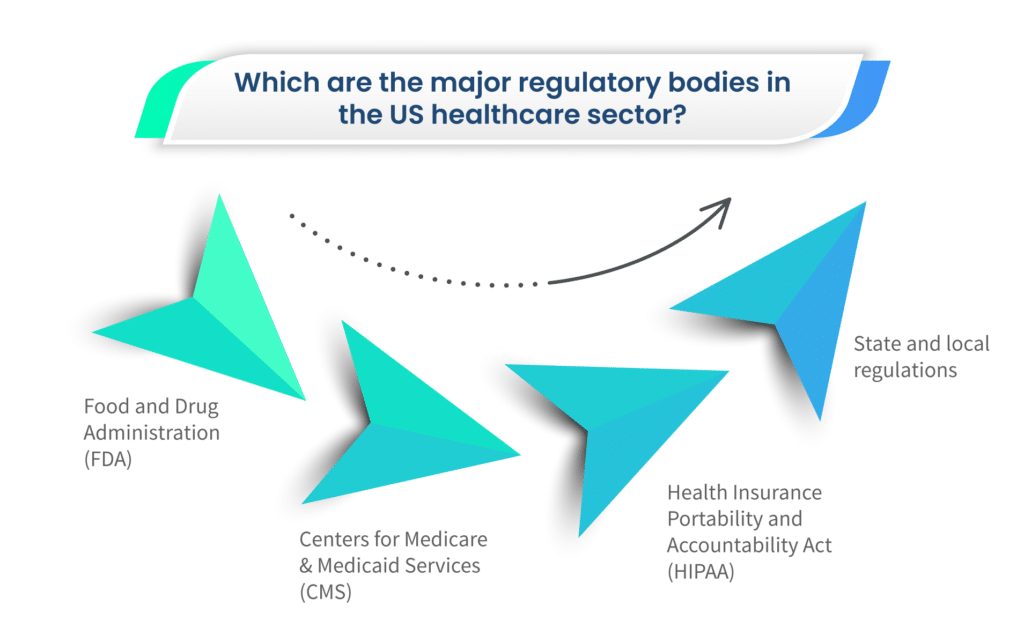
The following regulations guide the healthcare industry in the US at present.
1. Food and Drug Administration (FDA)
The FDA is a prominent regulatory agency in the United States responsible for safeguarding public health by ensuring the safety and efficacy of drugs, medical devices, food, and cosmetics. It reviews and approves new medications and medical technologies, monitors product recalls, and enforces regulations to prevent contamination and fraudulent marketing practices.
2. Centers for Medicare & Medicaid Services (CMS)
CMS oversees the Medicare and Medicaid programs in the United States, which provide healthcare coverage for millions of Americans. It sets standards for healthcare providers participating in these programs, manages reimbursement rates, and monitors compliance with billing and coding rules.
3. Health Insurance Portability and Accountability Act (HIPAA)
HIPAA is a federal law in the United States that focuses on safeguarding patient health information. It establishes standards for the privacy and security of electronic health records (EHRs) and requires healthcare organizations and their business associates to protect patient data from unauthorized access and disclosure.
4. State and local regulations
In addition to federal regulations, healthcare providers must comply with state and local regulations, which can vary widely. These regulations cover areas such as licensure, scope of practice, and healthcare facility requirements. States often have their own health departments or regulatory bodies.
B. Evolving regulatory trends in healthcare
As healthcare evolves and technology advances, the regulatory landscape will continue to change. Staying informed about these evolving regulations and trends is essential for healthcare organizations and professionals to ensure compliance, provide high-quality care, and adapt to the shifting healthcare environment.
1. Telehealth and virtual care compliance
The rise of telehealth and virtual care services has introduced new regulatory challenges and opportunities. Healthcare providers must navigate licensure issues, reimbursement policies, and privacy concerns when delivering care remotely. Regulatory bodies are continually adapting to accommodate the growth of telehealth while maintaining patient safety and quality of care.
2. Data privacy and security
Data breaches and cyberattacks pose significant threats to patient information. Regulatory authorities are strengthening data privacy laws and security requirements to address these concerns. Complying with regulations such as the General Data Protection Regulation (GDPR) in Europe and the Health Information Trust Alliance (HITRUST) in the United States is crucial for protecting patient data.
3. Value-based care initiatives
The shift from fee-for-service to value-based care models is changing the way healthcare is delivered and reimbursed. Regulatory bodies are developing new frameworks to incentivize providers to focus on outcomes and cost-effective care. Compliance with these initiatives involves quality reporting, care coordination, and performance measurement.
Core components of regulatory compliance in healthcare
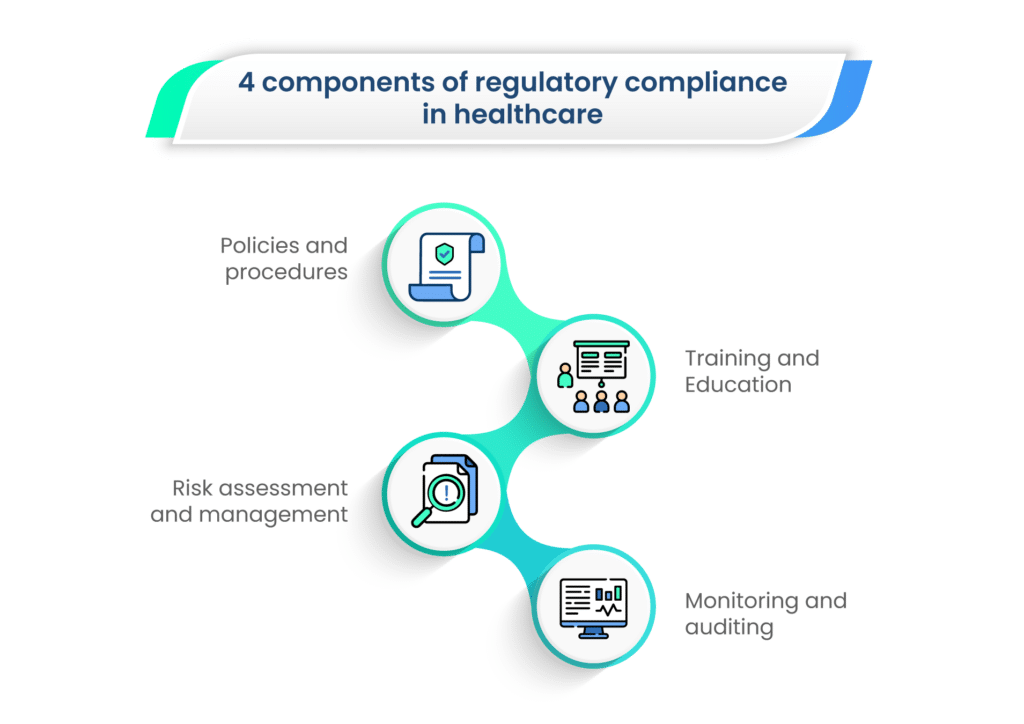
Regulatory healthcare compliance is divided into four main categories, which are further divided into sub-categories. Let us have a look at all the categories and subcategories of regulatory healthcare compliance.
A. Policies and procedures
There are two sub-categories for policies and procedures
1. Developing effective policies
Effective policies and procedures are the foundation of regulatory compliance in healthcare. Healthcare organizations must develop clear, comprehensive, and up-to-date policies that align with regulatory requirements. This includes defining processes for patient care, data security, billing, and other critical aspects of healthcare operations.
2. Ensuring proper documentation
Proper documentation of policies and procedures is essential. Healthcare providers should maintain records of policy creation, revisions, and distribution. Documentation helps demonstrate compliance efforts and provides a reference for staff members to follow.
B. Training and Education
Training and education of the employees is an integral part of regulatory compliance in healthcare. It is an ongoing process rather than a one-time exercise.
1. Employee training
Healthcare organizations should provide comprehensive compliance training for all employees, including clinical staff, administrative personnel, and support staff. Training should cover relevant regulations, policies, and procedures to ensure that everyone understands their compliance responsibilities.
2. Ongoing education
Compliance is an evolving field, and regulations change over time. Ongoing education is crucial to keep staff informed about the latest compliance requirements and best practices. Regular training sessions, workshops, and updates help maintain a culture of compliance.
C. Risk assessment and management
Every activity brings risks. There were 11 reported healthcare data breaches of more than 1 million records in 2022 and a further 14 data breaches of over 500,000 records (HIPAA Journal). This makes risk assessments and management paramount.
1. Identifying compliance risks
Healthcare organizations should conduct regular risk assessments to identify potential compliance vulnerabilities. This involves evaluating processes, practices, and external factors that could pose compliance risks. Risk assessments help prioritize areas for improvement.
2. Mitigation strategies
Once compliance risks are identified, healthcare organizations should implement mitigation strategies. This may involve process improvements, policy revisions, or additional training to address specific risks. Mitigation strategies aim to reduce the likelihood of non-compliance.
D. Monitoring and auditing
Monitoring and auditing regularly is a step that cannot be missed. It consists of two sub-steps.
1. Regular audits and self-assessments
Healthcare organizations should conduct regular internal audits and self-assessments to evaluate compliance with policies and regulations. Audits may be conducted by dedicated compliance officers or teams. These assessments help identify compliance gaps and areas needing improvement.
2. Corrective action plans
When non-compliance is identified, healthcare organizations should develop corrective action plans to address deficiencies. These plans outline steps to remediate issues, prevent recurrence, and ensure ongoing compliance. Corrective actions may involve policy revisions, additional training, or process changes.
Effective regulatory compliance in healthcare requires a proactive approach that encompasses policies, education, risk management, and ongoing monitoring. By focusing on these core components, healthcare organizations can create a culture of compliance, reduce the risk of regulatory violations, and ultimately provide better care to patients while maintaining the trust of regulators and the public.
Technological solutions for regulatory compliance in healthcare
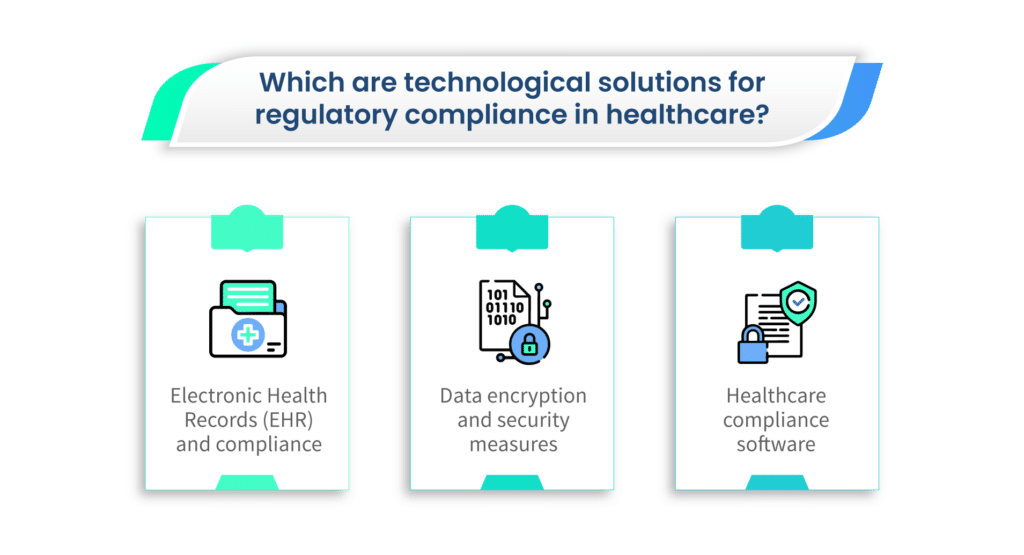
There are many solutions for regulatory compliance in healthcare. Here are some of them:
A. Electronic Health Records (EHR) and compliance
EHR plays a crucial role in healthcare compliance by facilitating the secure and organized storage of patient health information. Here’s how EHR systems contribute to compliance:
- Data privacy and security: EHRs are designed to meet data privacy and security standards, such as HIPAA in the United States. They offer features like user authentication, audit trails, and access controls to protect patient information from unauthorized access and breaches.
- Documentation compliance: EHRs enable healthcare providers to maintain accurate and complete patient records, including medical histories, treatment plans, and progress notes. This documentation is essential for compliance with regulations related to patient care and billing.
- Automated compliance checks: Many modern EHR systems incorporate compliance checks and alerts to help providers adhere to clinical guidelines and billing rules. These systems can flag potential issues, such as drug interactions or missing documentation, in real-time.
- Interoperability: EHRs support the exchange of patient data among healthcare providers and systems, improving care coordination and patient outcomes while ensuring compliance with data-sharing regulations.
B. Data encryption and security measures
Data encryption and security measures are critical components of healthcare compliance, particularly in safeguarding patient information:
- Data encryption: Encrypting sensitive patient data, both at rest and in transit, helps protect it from unauthorized access or interception. Strong encryption methods, such as Advanced Encryption Standard (AES), are commonly used.
- Access controls: Implementing access controls ensures that only authorized personnel can access patient records and other sensitive data. Role-based access control (RBAC) systems help limit access to what is necessary for each individual’s job responsibilities.
- Regular security audits: Healthcare organizations should conduct regular security audits to identify vulnerabilities and assess the effectiveness of security measures. Penetration testing and vulnerability assessments can help uncover weaknesses.
- Data backup and recovery: Data backup and disaster recovery plans are essential for compliance. Regularly backing up patient data and having a robust plan in place to recover data in case of incidents or breaches are crucial aspects of compliance.
- Security awareness training: Employees should receive training on security best practices to reduce the risk of security breaches due to human error. This includes recognizing phishing attempts and practicing good password hygiene.
C. Healthcare compliance software
Healthcare compliance software is specifically designed to help organizations manage and track compliance efforts. Key features and benefits include:
- Policy management: These tools assist in creating, disseminating, and updating policies and procedures. They often include version control and document management features.
- Training and certification tracking: Healthcare compliance software helps organizations track employee training, certifications, and continuing education requirements, ensuring staff remain compliant and up-to-date.
- Audit and reporting: These tools simplify the process of conducting internal audits, self-assessments, and compliance reporting. They can generate reports that highlight areas of non-compliance and track corrective actions.
- Risk assessment: Some compliance software includes risk assessment modules to identify and prioritize compliance risks, helping organizations proactively address potential issues.
- Incident reporting: Healthcare compliance software often includes incident reporting features, allowing employees to report compliance violations, privacy breaches, or other incidents securely and confidentially.
Scrut is an excellent regulatory compliance management software. In the coming section, we will check out how can Scrut help you in healthcare compliance. But first, let’s look at the challenges one might face while developing a robust healthcare compliance system.
Challenges and solutions to healthcare compliance
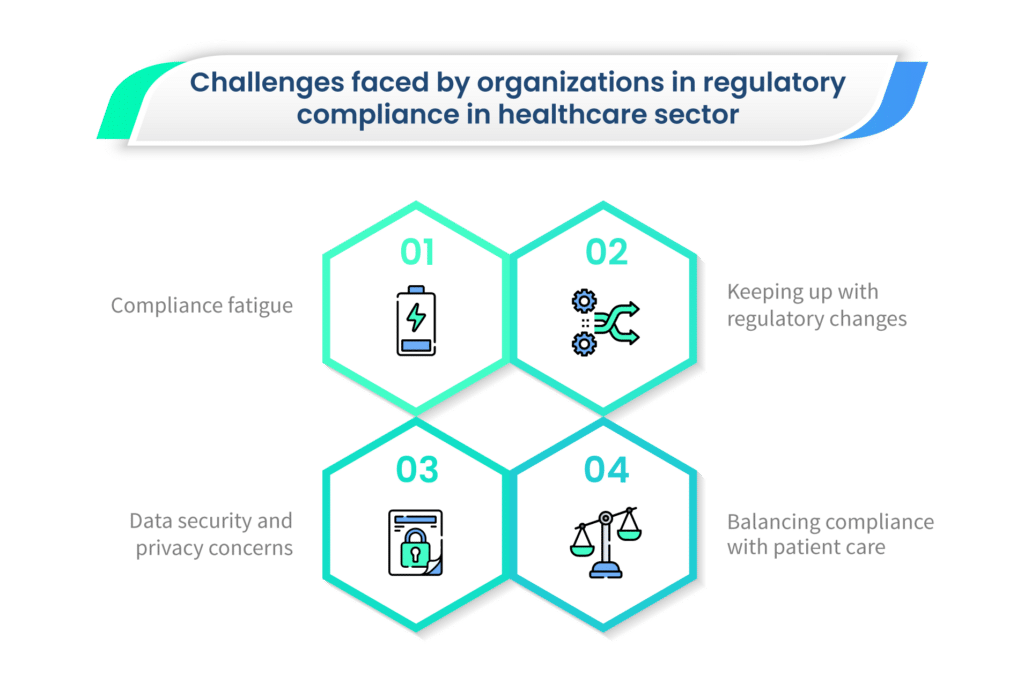
Here are some of the challenges, the impact those challenges can have on the organization, and how you can deal with them.
A. Compliance fatigue
Challenge: Compliance fatigue refers to the weariness and reduced diligence that healthcare professionals and organizations may experience due to the constant need to adhere to numerous regulations and guidelines.
Impact: When individuals and organizations experience compliance fatigue, they may become less vigilant, leading to lapses in adherence to crucial compliance measures. This can result in an increased risk of violations, compromised patient safety, and potential legal and financial repercussions.
Mitigation: To combat compliance fatigue, healthcare organizations should implement strategies such as regular staff training and awareness programs, clear communication about the importance of compliance, and the use of technology to automate and streamline compliance processes.
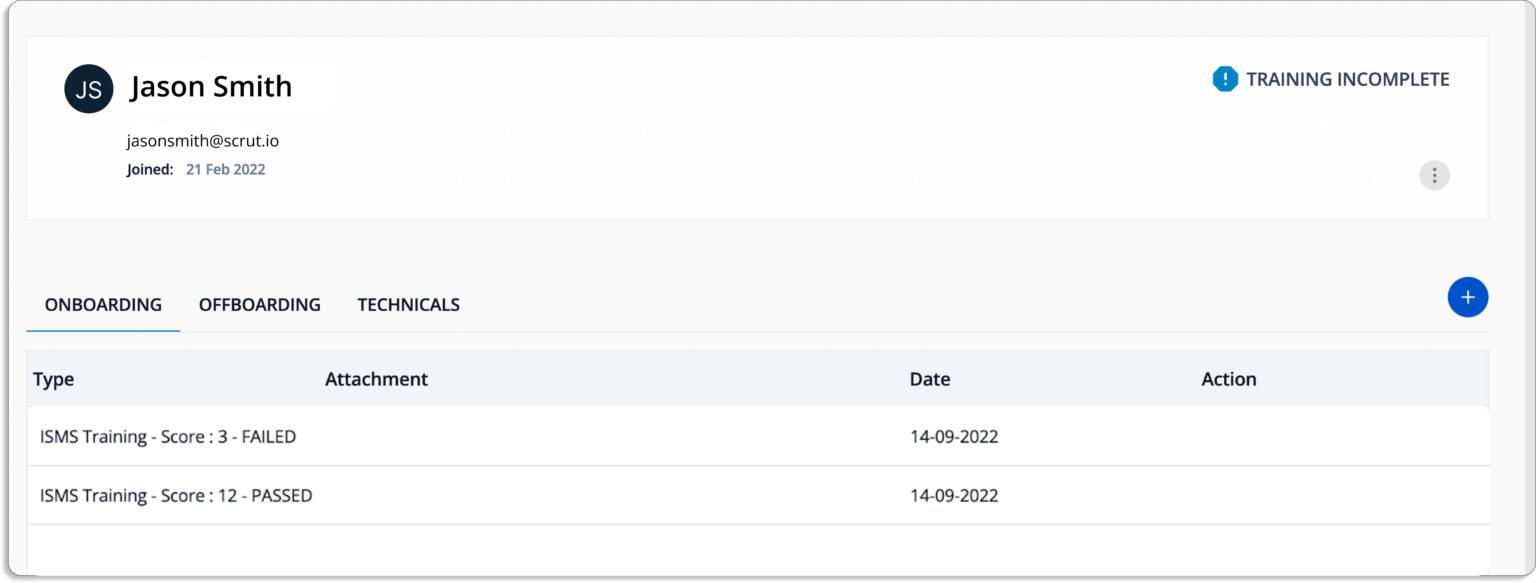
How can Scrut help? Scrut offers automated employee infosec training with a pre-built 30-minute information security course created by industry professionals. This training equips staff members with everything they need to understand possible hazards, eliminate slippages, and develop a secure posture. The platform also allows employees to examine policies effortlessly, evaluate notifications, and recognize security processes in one place.

Upon completion of the training, employees are required to take a quiz to evaluate their understanding and knowledge.
B. Keeping up with regulatory changes
Challenge: Healthcare regulations are dynamic, and they frequently change at the federal, state, and local levels. Staying up-to-date with these changes is a continuous challenge.
Impact: Failing to keep pace with regulatory changes can lead to non-compliance. Healthcare organizations may inadvertently operate under outdated policies and procedures, exposing themselves to legal risks.
Mitigation: Healthcare organizations should designate individuals or teams responsible for monitoring regulatory updates. This can include subscribing to regulatory newsletters, attending industry conferences, and leveraging compliance software that offers real-time updates. Regularly scheduled compliance audits can also help identify areas that need adjustment due to regulatory changes.
How can Scrut help? You can invite your auditors and communicate with them directly through the platform. With all the necessary policies, controls, and evidence centralized in one place, audits can be completed quickly, saving time and effort.
The Scrut platform integrates throughout your landscape to automate evidence collection and allows you to design, assign, and monitor assignments for compliance requirements. It connects with a variety of application environments, including HRMS, endpoint management, and other technologies, to automate the human evidence collection process. The tool gathers evidence automatically across 70+ integrations and addresses the most concerning vulnerabilities.
With all your rules, processes, controls, evidence, and documentation stored in one centralized platform, Scrut facilitates compliance audits and ensures easy access to all necessary information.

C. Data security and privacy concerns
Challenge: Healthcare organizations handle vast amounts of sensitive patient data, making them attractive targets for cyberattacks and data breaches. Maintaining robust data security and privacy measures is a constant challenge.
Impact: Data breaches can have severe consequences, including financial losses, reputational damage, legal penalties, and patient mistrust. Healthcare organizations must prioritize data protection to avoid these risks.
Mitigation: Implement comprehensive data security measures, including encryption, access controls, regular security assessments, and employee training on cybersecurity best practices. Compliance with data privacy regulations, like HIPAA, is essential in safeguarding patient information.
How can Scrut help?
Scrut Risk Management: The platform provides a single interface for identifying, assessing, and mitigating IT and cyber risk.
It provides organizations with the awareness they need to stay ahead of risks and communicates risk implications on high-priority strategic targets. By utilizing scoring techniques, expert-provided risk scores, and automated workflows, the platform enables the quick and easy establishment of new IT risk programs to prevent, control, and mitigate risks.
One key feature of Scrut is the ability to create and maintain a risk register. A risk register is a repository of all the risks that your organization faces, including a description of the risk, the likelihood of its occurrence, and the impact of the risk.

Scrut Risk Management allows you to leverage the pre-loaded risk library or create custom risks, establish the treatment approach, develop mitigation workflows, and assign responsibilities all in one location.
D. Balancing compliance with patient care
Challenge: Healthcare providers face the delicate task of balancing strict compliance requirements with the primary goal of providing high-quality patient care. An overemphasis on compliance can sometimes hinder efficiency and patient-provider relationships.
Impact: Focusing too much on compliance at the expense of patient care can lead to patient dissatisfaction, decreased quality of care, and staff burnout.
Mitigation: Achieving the right balance involves clear communication of compliance expectations, streamlining compliance processes to minimize disruption to care delivery, and fostering a culture of compliance throughout the organization. Involving clinicians in compliance decisions and emphasizing the alignment of compliance with patient safety and quality can help strike this balance effectively.
How Scrut can help? Scrut revolutionizes the compliance process, saving 75% of manual effort while enhancing accountability and the speed of completing InfoSec tasks. This platform offers a more efficient way to achieve compliance by eliminating time-consuming manual procedures and keeping you updated on the progress and effectiveness of your programs.
With Scrut smartGRC, you stay informed about the overall status of your GRC program, as depicted in the accompanying screenshot:

Scrut is a single point of contact for all compliance-related responsibilities. With a library of 50+ policies established and vetted by our in-house infosec specialists, you can start preparing your compliance program in minutes.

Additionally, you can also use a built-in inline editor to modify policies to your business needs.

Scrut provides a seamless and unified experience for achieving compliance with various information security frameworks. You can easily align your custom controls with prebuilt controls mapped to globally recognized frameworks. The Scrut smartGRC platform covers the following standards: SOC 2, SOC 3, ISO 27001, ISO 27701, ISO 27017, ISO 27018, ISO 22301, ISO 20000-1, GDPR, HIPAA, FERPA, CCPA, PCI DSS, etc.
Conclusion
In summary, healthcare regulatory compliance is a cornerstone of the healthcare industry, safeguarding patient well-being, ethical practices, and industry integrity. Compliance is not just a legal obligation but a commitment to providing safe, high-quality care.
The complexity of the healthcare regulatory landscape, especially in the United States, demands continuous vigilance and adaptation. Staying well-informed about evolving regulations and swiftly responding to industry changes is imperative for healthcare organizations and professionals alike. It’s not merely about following the rules but also about embracing a culture of responsibility and accountability.
In the contemporary healthcare landscape, where data security and privacy are paramount, advanced technological solutions like Scrut play a pivotal role. Scrut offers a comprehensive platform that streamlines and automates compliance processes, making them more efficient and effective. From policy management to risk assessment, Scrut provides the necessary tools and features to protect sensitive patient information.
FAQs
1. What is healthcare regulatory compliance?
Healthcare regulatory compliance refers to the adherence to various laws, rules, standards, and guidelines established by government agencies and regulatory bodies to ensure the delivery of safe, high-quality, and ethical healthcare services.
2. Why is healthcare regulatory compliance important?
Healthcare regulatory compliance is crucial because it helps protect patient safety, maintain ethical standards, and uphold the integrity of healthcare services. Non-compliance can lead to legal actions, financial penalties, and compromised patient well-being.
3. How can healthcare organizations stay compliant with evolving regulations?
Healthcare organizations can stay compliant by establishing robust compliance programs, appointing compliance officers, conducting regular audits, and providing ongoing staff training. Staying informed about regulatory changes and adapting to them is essential.