• ABOUT MAIC
  • JOINT MAIC TEAMS
  • CONTACT US
  • ABOUT MAIC
  • JOINT MAIC TEAMS
  • CONTACT US

MARKET

Companies Directory

ACADEMY

Communities & Courses

WORK

Jobs & Projects

MAGAZINE

News & Adverts

  • HEALTHCARE
    Healthcare Industry
    Healthcare Trends
    Healthcare Economics
    Healthcare Regulations
    Healthcare Innovations
    Medical Innovations
    Global Health
    Patient Stories
    Healthcare Ethics
    Public Health
    Modern Healthcare

    HEALTHCARE

    Healthcare development news reflecting advancements, challenges, and innovations in the healthcare services industry. 

    Contact us

    Publish articles & research papers in HEALTHCARE categories.

  • FACILITY
    Healthcare Design
    Sustainability
    Technological
    Financial
    Infrastructure
    Workforce
    Patient Experience
    Regulatory Updates
    Community Initiatives

    FACILITY

    Developments in healthcare facilities, reflecting efforts to enhance infrastructure, technology, patient experience, etc.,

    Contact us

    Publish articles & research papers in FACILITY categories.

  • TECHNOLOGY
    News and Events
    Information Technology
    Telemedicine
    Regulatory Compliance
    Medical Devices
    Healthcare Blockchain
    Artificial Intelligence
    Healthcare IoT
    Innovation and Startups
    Health Mobile Apps
    Wearable Technology
    Healthcare Interoperability
    Healthcare Robotics
    Healthcare Cybersecurity
    Personalized Medicine

    TECHNOLOGY

    Exploring the intersection of healthcare and technology, including electronic health records, wearable devices, and AI in healthcare.

    Contact us

    Publish articles & research papers in TECHNOLOGY categories.

  • MANAGEMENT
    Operations Management
    Performance Metrics
    Strategic Planning
    Financial Management
    Change Management
    Policy and Regulation
    Quality Improvement
    Ethics and Compliance
    Human Resources
    Information Technology
    Leadership Strategies
    Legal Issues and Risk
    Marketing and Branding
    News and Trends
    Population Health

    MANAGEMENT

    Discussing strategies for effective healthcare management, healthcare system optimization, and improving patient outcomes.

    Contact us

    Publish articles & research papers in MANAGEMENT categories.

  • EDUCATION
    Workforce Development
    Remote Learning
    Diversity and Inclusion
    Patient Education
    Innovations In Assessment
    Innovations In Training
    Legal Considerations
    Professional Development
    Continuing Education
    Global Initiatives
    Leadership Development
    Interdisciplinary Initiatives
    Residency Program
    Interdisciplinary Initiatives

    EDUCATION

    Providing insights into medical education programs, training opportunities, and innovations in medical curriculum.

    Contact us

    Publish articles & research papers in EDUCATION categories.

  • RESEARCH
    Access and Equity
    Analytics and Decision
    Cost and Value
    Delivery Models
    Facility Performance
    Payment and Reimbursement
    Policy and Reform
    Quality Improvement
    Research Methodologies
    Service Integration
    Utilization and Outcomes
    Workforce and Staffing
    Patient Experience
    Patient-Centered Design
    Population Health
    Sustainability
    Safety and Security
    Space Utilization
    Telemedicine Services
    Compliance & Accreditation

    RESEARCH

    SummariSing recent breakthroughs in medical research, ongoing clinical trials, and their potential impact on patient care.

    Contact us

    Publish articles & research papers in RESEARCH categories.

LOGIN / REGISTER
Home Technology

Are medical imaging technologies being used to their fullest capacity or are these being overused?

Majid by Majid
2 years ago
in Technology
Reading Time: 5 mins read
0 0
A A
0
Are medical imaging technologies being used to their fullest capacity or are these being overused?

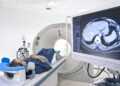
Man in Scanner

0
SHARES
1
VIEWS
Share on FacebookShare on Twitter
By Michael Helphinstine, CT Technologist, UK HealthCare

It is without a doubt that medical imaging has seen exponential growth in advancements in technology. We are technologically far moved from where we stood 20 years ago.

Merely 15 years ago, we were seeing a 64 slice CT scanner advertised as “the fastest scanner on the market.” Many outpatient facilities were racing to buy a relatively expensive open MRI to capture claustrophobic patients. Ultrasound was beginning to offer 3D imaging, which seemed futuristic. There were stirs of conversations of general radiography going completely filmless and to most seemed preposterous. Now as we reflect on our advancements, these “upgrades” are laughable to most in the imaging world.

As of today, it is not unheard of to see a facility with multiple dual source CT scanners that can perform 300 or more slices and scan a single body part (including cardiacs) in under one second. MRIs have almost made it a standard that the bore size and bore length are comparable to the size of a CT scanner. These types of bores have almost completely eliminated open MRI scanners. In ultrasound, 3D and even 4D come standard on most pieces. Conventional X-ray almost unknowingly skipped right past the computed radiography phase of advancement and jumped straight to digital exposure with images being revealed instantly.

Given these advancements, are we utilizing the updated technologies to their full extent? Conversely, are we making these advancements too accessible? This is a discussion that seems to cause reflection on how we treat these technologies to analyze, care, and diagnose our patients.

Are we utilizing these technologies to their fullest extent?

In short, we are engaging most of these advancements correctly in clinical settings. However, there are opportunities as technologists and administrators where we could better fulfill patient care with our imaging technologies.

As improvements are made with each modality, more opportunities arise to use technology and engineering to decrease patient dose, exposure time, scan time and improve image quality. Cognitively evaluate the crossing point of cost and use of equipment with patient outcomes. For example, some dual source CT scanners offer flash or quick scan modes that can be used on examinations. These modes DRASTICALLY decrease dose and scan time. However, these are hefty price tags that many community hospitals cannot afford. There are other advanced scanners available to greatly improve image quality and patient experience. These offer more affordability for the locations that do not support the volume.

The options are almost endless and can easily conquer the decision-making skill of even the keenest administrator. Extensive research, observation, knowledgeable managers and experienced staff can be resourceful in making those decisions. Medical imaging is advancing what seems to be daily. Decisions would need aid to conclude on how to use your money wisely, where to place the equipment to get the most utilization and which technologies are needed to ensure you are serving your patient population.

Are we making our technological advancements too accessible?

Healthcare has become extremely reliant on medical technologies and is becoming more prevalent in the clinical setting. As previously mentioned, our radiological advancements have given us opportunities to improve patient outcome.

Most often, we see a rush to image in the Emergency Department. Time is of the essence with true emergency patients, but this also does not open the doors to rush to imaging. There are numerous examples that plague advanced imaging modalities. In addition to our equipment advancing, so has the criteria and research. The newest technology used to ensure proper imaging has been mandated by the CMS to utilize Appropriate Use Criteria (AUC). The AUC is an intelligent technological advancement developed on indications with scores ranging from 1-10. A score of one being inappropriate use of imaging and a ten being completely appropriate. These diagnoses are taken through a clinical decision support mechanism backed by evidence-based research.

Even though AUC scores an examination as a one, providers continue to image patients. We are utilizing the technologies supplied and bypassing just to rely on the speed of imaging. Some providers have openly admitted that the advancements have allowed them to lean heavily on the results from imaging.

With updated picture archiving systems and dictation systems, radiologists are able to have extraordinary turnaround times. Again, due to the advancements, providers are relying on and pushing radiologists to have quick turnaround times.

The issues does not reflect provider only reliance. There is much to be said about technologists’ performance given these advancements. Undoubtedly, a technologist’s role is crucial and a technologist will face a multitude of issues throughout a shift. Technological advancement has made their duties accelerate rapidly. Contrarily, it has caused contentment with suboptimal imaging and quality. Digital radiography has changed the process of portable examinations. Digital radiography has completely eliminated “the walk of shame” back to the floor to re-shoot an image. Instead, the complacency with attention to detail has given the option of an immediate fix and repeat without the pressure of returning to the floor to re-image. As with most discussions, there are always nuances to how a subject is perceived. However, it is not debatable that advancement in radiological technologies has improved patients almost universally for their visits. Each modality has seen their fair share of improvements in technology. Some modality advancements were quick and ever-changing while some divisions saw only little change. Nonetheless, it has been favorable for the field. It should be taken with great observation how we use our radiological technologies in the clinical setting. Advancements will continue to grow and we will continue to see enhanced treatments, diagnoses and most importantly, patient outcomes.


Share on Facebook

Get real time update about this post categories directly on your device, subscribe now.

Unsubscribe
Majid

Majid

Related Posts

What can IoT do for healthcare?
Healthcare IoT

What can IoT do for healthcare?

March 13, 2024
How AI Can Improve Healthcare Operations Management
Artificial Intelligence

How AI Can Improve Healthcare Operations Management

March 13, 2024
Will Blockchain Revolutionize Healthcare? The Truth or A Hype
Healthcare Blockchain

Will Blockchain Revolutionize Healthcare? The Truth or A Hype

March 1, 2024
Blockchain technology applications in healthcare: An overview
Healthcare Blockchain

Blockchain technology applications in healthcare: An overview

March 1, 2024

Leave a Reply Cancel reply

Your email address will not be published. Required fields are marked *

Weather

Stay Connected test

  • 23.9k Followers
  • 99 Subscribers

Search

No Result
View All Result
  • Trending
  • Comments
  • Latest
17 top healthcare innovations 2023, identified by the global R&D community

17 top healthcare innovations 2023, identified by the global R&D community

March 1, 2024
Importance of Community Healthcare Initiatives

Importance of Community Healthcare Initiatives

March 13, 2024
Healthcare Operations Management: Everything You Need to Know

Healthcare Operations Management: Everything You Need to Know

March 13, 2024
Healthcare Economics: Key Features of Healthcare Markets

Healthcare Economics: Key Features of Healthcare Markets

March 1, 2024
Three steps healthcare organisations can take to use generative AI responsibly

Three steps healthcare organisations can take to use generative AI responsibly

0
Are medical imaging technologies being used to their fullest capacity or are these being overused?

Are medical imaging technologies being used to their fullest capacity or are these being overused?

0
Integrating Smart Hospital Solutions into Health IT Ecosystems

Integrating Smart Hospital Solutions into Health IT Ecosystems

0
Focusing on the Outcomes of Strong Zero-Trust Architecture in Healthcare

Focusing on the Outcomes of Strong Zero-Trust Architecture in Healthcare

0
8 Examples Of Quality Improvement Initiatives In Healthcare & Hospitals

8 Examples Of Quality Improvement Initiatives In Healthcare & Hospitals

March 13, 2024
What is Quality Improvement in Healthcare?

What is Quality Improvement in Healthcare?

March 13, 2024
Importance of Community Healthcare Initiatives

Importance of Community Healthcare Initiatives

March 13, 2024
Legislation updates for private health service establishments

Legislation updates for private health service establishments

March 13, 2024

Recent News

8 Examples Of Quality Improvement Initiatives In Healthcare & Hospitals

8 Examples Of Quality Improvement Initiatives In Healthcare & Hospitals

March 13, 2024
What is Quality Improvement in Healthcare?

What is Quality Improvement in Healthcare?

March 13, 2024
Importance of Community Healthcare Initiatives

Importance of Community Healthcare Initiatives

March 13, 2024
Legislation updates for private health service establishments

Legislation updates for private health service establishments

March 13, 2024

Follow MAIC

  • United Kingdom - Solihull
  • (+44) 0208-1236117
  • Saudia Arabia - Riyadh
  • (+966) 059-1248787
  • 9 am - 7 pm
  • support@maic.center

SUPPORT

  • FAQ
  • Help Center
  • Terms of Service
  • Privacy Policy
  • Pricing
  • FAQ
  • Help Center
  • Terms of Service
  • Privacy Policy
  • Pricing

Download apps

  • iOS App
  • Android App

Follow Us

Pinterest-square Twitter Youtube Linkedin

NEWSLETTER

Stay up to date with our latest news, receive & deals.

MAIC @2024 Medical Architecture InterComunity

Add New Playlist

No Result
View All Result

© 2026 JNews - Premium WordPress news & magazine theme by Jegtheme.

Are you sure want to unlock this post?
Unlock left : 0
Are you sure want to cancel subscription?