What is Infection Control (CDC)?
The CDC refers to Infection Control measures as the actions aimed at preventing or stopping the spread of infections within a healthcare setting. Infection Control and Prevention measures help ensure the hospital environment is as safe as possible for both patients and staff. These measures include an assessment of how infections can be spread and how they can be stopped as well as more detailed recommendations for known pathogens.

Why is Infection Control so Important in Hospitals?
Infection Control is becoming increasingly important in recent times as there has been a rise in the number of Hospital-Acquired Infections (HAI). WHO estimates that 7% of all patients admitted into healthcare facilities will acquire at least 1 HAI[1]. In January 2021, NHS England estimated that 18% of COVID-19[2] cases were in fact hospital-acquired, and during the first wave of the pandemic, reports cited that 1 in 8[3] hospitalised COVID cases were as a result of infections acquired in the hospital.
To mitigate against any infection risks in hospitals, healthcare staff are advised to perform 10 Standard Infection Control Precautions (SICP)[4]. These Infection Control measures help to minimise the spread of both known and unknown pathogens. SICPs must be performed by all healthcare personnel, at all times and for all patients to mitigate against the risk of HAIs.
What are the Standard Infection Control Precautions in Healthcare?
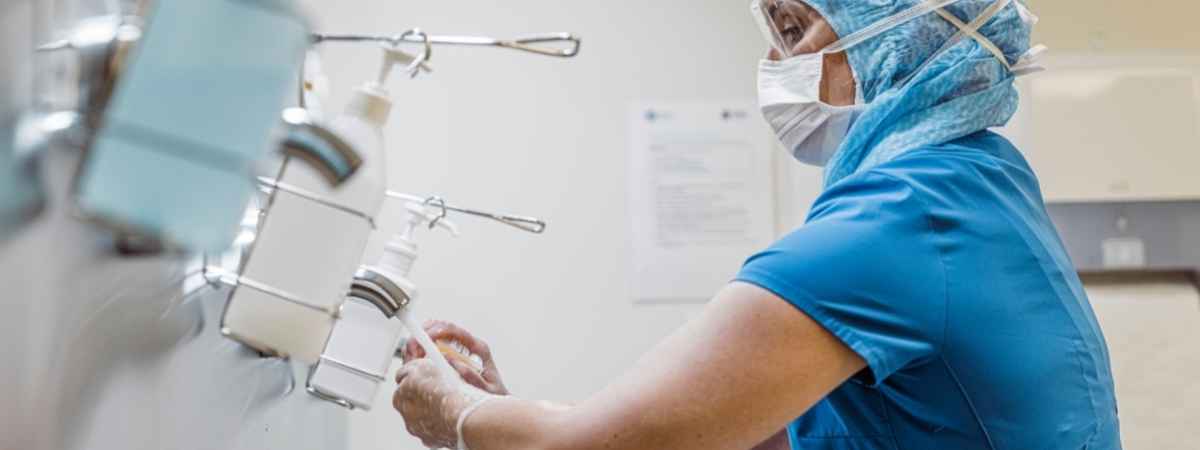
1. Hand Hygiene
Hand hygiene is considered one of the most important ways to reduce the transmission of infectious agents that cause healthcare associated infections (HCAIs).It sounds simple but this is one of the most vital Infection Control Procedures all healthcare personnel must take, through participating in the regular washing of hands.
WHO outlines 5 key moments for hand hygiene:
- Before touching the patient
- Prior to performing clean/aseptic procedure
- After any bodily fluid exposure risk
- After touching the patient
- After touching the patient’s surroundings
2. Placement and Infection Assessment
Before admission into the healthcare facility, all patients must be assessed for infection risks, as well as throughout their time in care. This will inform decisions about treatment.
Patients who may present a particular cross-infection risk may include:
- Patients presenting with diarrhea, or vomiting
- Those with an unexplained fever
- Patients who are known to have been previously positive with a Multi-drug Resistant Organism
- For COVID identifiers, Public Health Agency cites, loss of taste or smell, fever, and a new persistent cough as primary symptoms
3. Safe Management and Care of Environment
The environment for patients and healthcare staff must be safe for practice. Even if an area may look clean many dangerous micro-organisms can live on surfaces. There are many hotspots for these pathogens to live such as door handles, rails, tables, etc.
Therefore, the cleaning of these high-risk touchpoints is essential. When cleaning it is essential the appropriate cleaning products and disinfectants are used. Healthcare professionals should be aware of the schedules and responsibilities for cleaning and disinfecting the area and every facility should have strict cleaning protocols.
4. Safe Management of Equipment
It is essential any equipment you introduce into the healthcare facility is fit for purpose and intended for medical use. Where possible you should ensure the equipment comes with a robust service package and staff members are adequately trained on the safe use of this equipment.
Equipment can also be a known source of cross infection. For example, Oxford University Hospital traced an outbreak of a Hospital Acquired Infection, Canada Auris, back to their contact axilla thermometers.
Non-contact thermometers, such as the TRITEMP™ reduce touchpoints with customers, and require zero plastic probe covers, reducing the amount of contaminated waste, and optimising infection control.
With advances in technology, it is advisable when investing in new equipment for a hospital to ensure the equipment is optimised for infection control and prevention.
Does it eliminate the production of hazardous waste? Does it reduce contact? Can it be easily cleaned and decontaminated if it is to be used for multiple patients?
5. Safe Management of Linen
When storing or disposing of linen it is necessary to prevent the transmission of infections. Ensure all clean linen is stored in a specified area away from any soiled or contaminated items.
For any used/soiled linen ensure there is a laundry holder available in close proximity to the area the linen has been used in. This will reduce the movement of any potential contaminants.
It is essential that any infectious or contaminated linen is immediately placed in a water-soluble bag, safely secured, and tagged. Any infectious linen must be stored in a designated lockable area before it can be removed from the ward.
6. Personal Protective Equipment
PPE has come into the forefront of everyone’s mind this year in light of the pandemic. It helps mitigate the spread of infection. Personal protective equipment should be worn by healthcare staff to protect themselves against exposure to harmful pathogens.
The government mandates that all PPE should be:
- Stored close to the point of use in a clean area
- Used as single-use items unless stated differently by the manufacturer
- If reusable, PPE is thoroughly decontaminated after each use
- Within its expiration date
- Immediately changed after each patient
- Disposed of correctly (see Safe Disposal of Waste)
- Disposed of if damaged or contaminated
7. Respiratory and Cough Hygiene
Proper respiratory and cough hygiene practices aim to reduce the risk of cross-transmission of different respiratory illnesses and pathogens such as, influenzas or COVID-19.
Catch it, Bin it, Kill it
- Cover nose and mouth with disposable tissues if coughing or blowing/wiping the nose
- Bin the tissue after use
- Ensure you wash your hands after
Healthcare professionals should both practice respiratory and cough hygiene themselves and encourage it among patients. Ensure there are tissues, plastic bags for the used tissues and handwashing stations.
8. Safe Management of Blood and Body Fluids
Healthcare facilities must ensure all staff is correctly trained on the decontamination of spillages of blood or other bodily fluids.
These spillages may transmit blood-borne viruses such as Hepatitis or HIV, therefore they must be dealt with swiftly.
The responsibilities for the decontamination for spillages of blood or body fluids will be clear within each setting. It is recommended to ensure easy access to a blood or body fluid spillage kit.
9. Safe Disposal of Waste
In hospitals there are several different categories of waste ranging from domestic waste (typical everyday waste), contaminated waste (swabs, probe covers, dressings etc.) to high-risk hazardous waste (sharps, medical devices etc.)
It is likely that the waste will need to be separated. It is important to follow your facility’s guidelines as to the proper separation of this waste.
10. Occupational Safety
Occupational Safety refers to the actions taken to reduce infection risk because of occupational exposure. This can come from a range of sources split into the following categories: biological, chemical, or physical exposure. In particular, staff must practice caution when working with sharps.